
Eid ul Fitr is one of the most important Islamic festivals celebrated by Muslims around the world. Eid ul Fitr marks the end of the month of Ramadan. During Ramadan, Muslims fast from dawn to sunset, pray, give charity and focus on spiritual growth. Eid ul Fitr is celebrated on the first day of Shawwal, the tenth month of the Islamic lunar calendar. Because the Islamic calendar is based on the lunar calendar, the date of Eid ul Fitr changes each year.
In Pakistan, Eid ul Fitr is celebrated with great enthusiasm. It brings families, relatives, friends and communities together. People prepare for Eid by buying new clothes, applying mehndi, cleaning their homes, cooking traditional foods and arranging gifts and Eidi for children. Eid ul Fitr is also a time for charity and helping those in need. Muslims give Fitrana, also known as Zakat ul Fitr, before the Eid prayer. This helps less fortunate people to take part in the celebrations. So Eid ul Fitr represent not only joy and celebration but also gratitude, generosity, compassion and unity.
Eid ul Fitr is a Public holiday in Pakistan. The government announces the Eid holidays each year. In this guide you will learn about Eid ul Fitr in Pakistan including its date, public holidays, religious meaning, traditions, preparations, food, prayers and the ways people celebrate this occasion.
What is Eid ul Fitr?
Eid ul Fitr is a religious festival that begins on the first day of Shawwal, the tenth month of the Islamic lunar calendar. The word “Fitr” refers to breaking the fast. Eid ul Fitr marks the end of Ramadan. During Ramadan, Muslims pray, give charity and focus on spiritual reflection. Eid ul Fitr gives Muslims a chance to thank Allah for the strength and guidance they received during Ramdan.
the celebration begins when Ramadan ends and the new month of Shawwal begins. Muslims gather for the Eid prayer. After the prayer, people celebrate with their families and communities.
Is Eid ul Fitr a Public Holiday in Pakistan?
Yes Eid ul Fitr is celebrated as a holiday in Pakistan. The government announces the Eid holidays each year through an official holiday notification. These holidays give people a chance to take a break from work and enjoy time with family and loved ones. I hope you enjoy your time with family during this day.
Government offices, schools and many other organizations usually remain closed during the announced Eid holidays. However, essential services may continue to operate during the holidays.
For a list of national, religious and other holidays readers can visit our main Public Holidays in Pakistan guide.
How Many Days Are Eid Holidays in Pakistan?
The number of Eid holidays in Pakistan can change from one year to the next. The government announces the holiday period before Eid, based on the Islamic calendar and administrative needs.
The official holiday period may include days before or after Eid day, giving people time to travel, prepare for the festival and spend time with their families. Because the holiday dates can shift each year it is important to check the government notice for the exact Eid holiday schedule.
When is Eid ul Fitr in Pakistan?
Eid is celebrated on 1 Shawwal according to the Islamic lunar calendar. Since the Islamic calendar is based on the lunar cycle, Eid does not have a fixed date in the Gregorian calendar. Its date moves 10 to 12 days earlier each year.
In Pakistan, the beginning of Eid is traditionally determined through the sighting of the Shawwal moon. The official announcement is made after the moon-sighting process. Therefore the expected date may differ from the confirmed date.
Why is Eid ul Fitr Important?
Eid has religious, social and cultural importance for Muslims. It is not simply a day of celebration; it is also an occasion to express gratitude, practice generosity and strengthen relationships. Eid ul Fitr marks the completion of Ramadan, a month dedicated to fasting, prayer, charity and spiritual reflection. Muslims begin Eid by performing the Eid prayer and expressing gratitude to Allah. The festival also reminds Muslims of the importance of charity and compassion. Before the Eid prayer, eligible Muslims give Zakat ul Fitr also known as Fitrana, so that people in need can also take part in the celebrations.
Eid brings families, friends and communities together. People visit relatives houses, greet with each other, share meals and give Eidi to children’s. Eid is also a time to resolve misunderstandings. The spirit of Eid encourages people to help and share their happiness with those who may be less fortunate. Generosity and community support is a part of Eid celebrations.
How is Eid ul Fitr Celebrated in Pakistan?
Eid is celebrated with a great aunthesisam over the world. Its celebration is a combination of family gatherings, traditional foods and cultural activities. Preparations often begin days before Eid. Muslims take a bath, wear new clothes and prepare for the Eid prayer. On the morning of Eid, people gather at mosques, Eid grounds and prayer areas to perform the Eid prayer. After the prayer, people greet one another by saying “Eid Mubarak” and return home to celebrate with their families.
Fitrana is a form of charity associated with Eid ul Fitr. Its purpose is to help people in need so they can also participate in the celebrations of Eid. Muslims who are required to pay Fitrana usually give it before the Eid prayer. The amount and rules may vary according to religious guidance and local circumstances. Wearing clean clothes is a popular Eid tradition in Pakistan. People often purchase their Eid outfits weeks before the festival. Traditional Pakistani clothes, shalwar kameez are commonly worn on Eid. Women and girls may also wear dresses and apply mehndi as part of their Eid preparations.
Food is a part of Eid celebrations in Pakistan. Families prepare a variety of dishes and sweets for relatives and guests. Sheer Khurma and sewaiyan are the popular foods associated with Eid. Families may also prepare biryani, pulao, kebabs, sweets and other special dishes depending on their family traditions.
Giving Eidi is a tradition during Eid in Pakistan. Elders often give money or gifts to children’s and younger members of the family. For children’s, receiving Eidi is one of the exciting parts of Eid. It adds to the happiness of the celebration. Families may gather at the homes of grandparents, parents, siblings and other relatives.
Eid ul Fitr Traditions in Pakistan
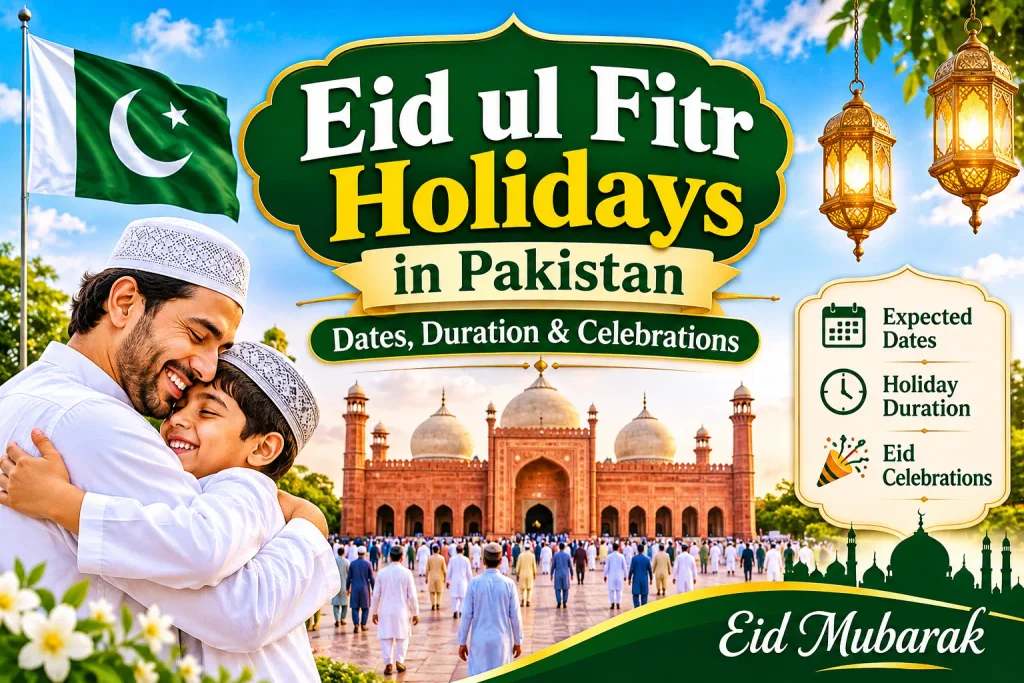
Eid is associated with traditions that vary between families and regions. People usually begin preparing for Eid during the last days of Ramadan. Common Eid traditions include shopping for clothes, applying mehndi, preparing traditional sweets, cleaning the home, giving Eidi, visiting relatives and exchanging Eid greetings.
Many families also decorate their homes and Prepare special meals for guests. Children often look forward to wearing new clothes, receiving Eidi eating their favorite sweets and visiting family members.
Eid ul Fitr Celebrations in Different Provinces of Pakistan
Eid ul Fitr is celebrated throughout Pakistan, but some traditions and foods differ between regions.
In Punjab, families celebrate Eid with prayers, family gatherings, traditional food, and visits to relatives. Sheer Khurma, sewaiyan, and other homemade dishes are commonly prepared for guests. In Sindh, Eid celebrations combine Islamic traditions with local cultural customs. Families wear traditional clothes, prepare special dishes, visit relatives, and exchange Eid greetings.
In Khyber Pakhtunkhwa, Eid is often marked by large family gatherings and community celebrations. People wear traditional clothing, offer Eid prayers, visit relatives, and prepare special meals. People in Balochistan celebrate Eid with prayers, family gatherings, traditional foods, and visits to relatives and friends. Local customs and traditional clothing add a distinct cultural character to the celebrations.
How Do People Prepare for Eid ul Fitr?
Eid preparations usually begin several days or weeks before the festival. Many people go shopping for clothes, shoes, accessories, gifts and other items needed for Eid. Women and girls may apply mehndi, while families clean and organize their homes.
Special foods and sweets are prepared for family members and guests. Parents and elders give Eidi to children’s. Another important preparation is paying Fitrana before the Eid prayer. These preparations help families to get ready for both the social aspects of Eid ul Fitr.
Eid ul Fitr Wishes:
Exchanging greetings is a part of Eid celebrations. The common greeting is “Eid Mubarak,” which means “Blessed Eid”. Some common Eid greetings include
- Eid Mubarak!
- Eid ul Fitr Mubarak!
- May you have a blessed Eid.
- Wishing you and your family a blessed Eid.
- May Allah accept your prayers and good deeds.
Conclusion
Eid ul Fitr is a cultural occasion in Pakistan. Eid ul Fitr marks the end of Ramadan. It provides an opportunity for Muslims to express gratitude, offer prayers, give charity and celebrate with families and communities. From Eid prayers and Fitrana to clothes, traditional food, Eidi and family gatherings Eid ul Fitr is celebrated with a strong spirit of happiness and togetherness. As a religious occasion and public holiday Eid ul Fitr holds an important place, in the Pakistan public holidays calendar. Although the exact date and official holiday period can change each year the religious and cultural importance of Eid ul Fitr remains the same.
The Eid holidays are officially announced by the government every year. For the latest confirmation of holiday dates, readers can check the official Eid holiday notification issued by the Cabinet Division.You can also explore the complete list of public holidays in Pakistan to learn about other national and religious holidays.